
A conditional political statement can change the questions a company asks without changing the equipment it controls. On 1 October, Reuters reported that Vladimir Putin said Western companies could recover their Russian assets under a favourable scenario. The report concerned businesses placed under what Moscow describes as temporary external administration. It did not identify a completed transfer, a schedule, or a mechanism available to every affected company. For business readers, the distinction matters: an opening in the discussion is different from an operating decision that a board can implement.
The immediate challenge for companies with interests in Russia is therefore to separate a possible future recovery from a usable production system. Ownership documents, access to management records, authority over bank accounts, customers and machinery describe different parts of that system. The analysis below examines those operating questions. It makes no finding about the legal status of individual assets and assumes no particular political outcome.
What the statement establishes
The Reuters report carried by AOL attributes the conditional possibility to Putin's remarks at the Valdai forum. It also reports his position that external administration did not amount to nationalisation. That is an attributed position, rather than an independent legal conclusion. The report gives no company-specific undertaking that would allow a reader to infer that an identified enterprise has already been returned.
A practical reading keeps the condition attached to the proposition. Removing it would turn a statement about what might happen into a statement about what will happen. Adding an assumed deadline would introduce information the report does not supply. For an operating team, the useful consequence is a reason to prepare questions and preserve evidence, rather than a reason to announce a restart. Preparation can be meaningful even when the decision itself remains unresolved.
Recovery has several separate meanings
An asset can appear in a corporate history as a factory, a distribution network, a shareholding or a brand. These descriptions do not identify the same recovery task. A shareholding concerns rights associated with an entity; a factory requires control of a physical site; a distribution network depends on continuing relationships. An enterprise may also rely on intellectual property or software that sits outside the physical premises. Treating the word asset as a complete inventory risks overlooking the functions that made the business useful.
A recovery map can distinguish the entity, its tangible property, contractual relationships, operating information and the authority to direct activity. Each category needs its own evidence. A list of machines is not evidence that customer contracts remain available, while a customer list does not establish that production equipment is maintained. The map should show what is known, what requires inspection and what depends on future agreement. This is a method of organising uncertainty, not a forecast that all those components will be recoverable.
Control is more specific than access
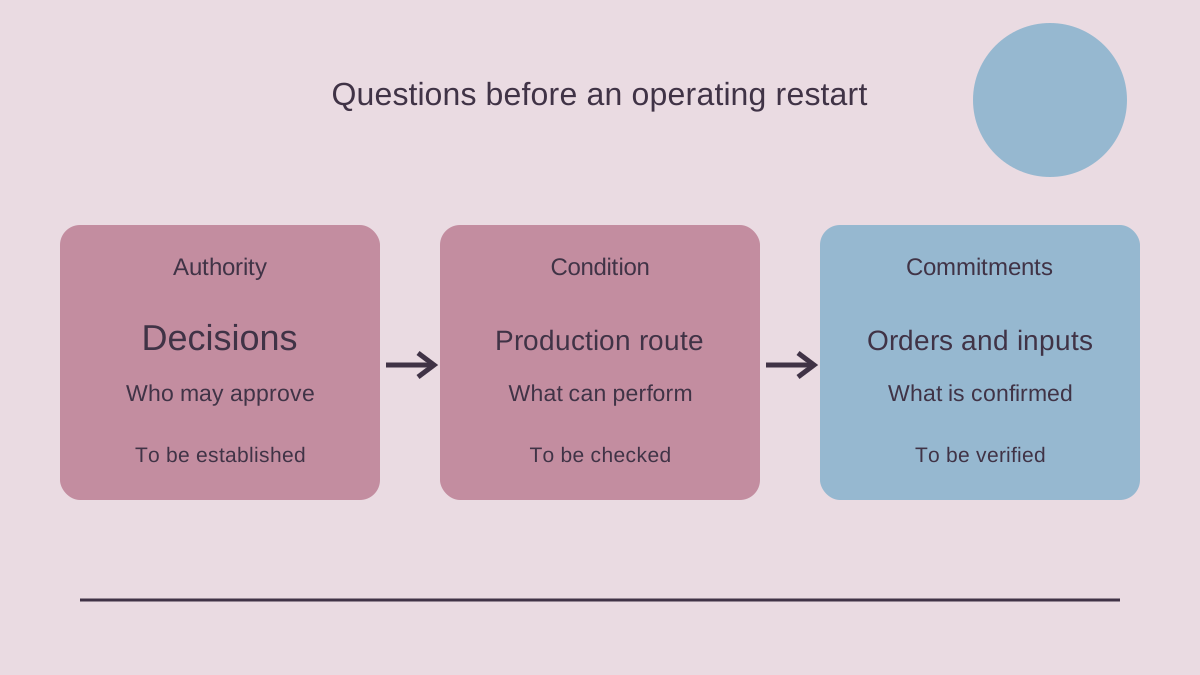
A company representative being able to enter a building would answer only one narrow question. Running the business also requires clear responsibility for approving purchases, accepting orders, allocating inventory and authorising payments. Where these responsibilities are divided, a production decision can be made by one person while another controls the resources needed to execute it. An operational review should identify the decision chain rather than assume that physical access carries every necessary authority.
The review can follow an ordinary order from enquiry to receipt of payment. Who may quote a price? Who can commit a delivery date? Who authorises material purchases, releases finished goods and deals with a complaint? Missing answers reveal where an apparent recovery would still leave execution blocked. These are hypothetical questions applicable to many interrupted businesses; they are not allegations about conduct at any particular company. Their value lies in showing the difference between a headline transition and an executable commercial process.
The condition of the site matters
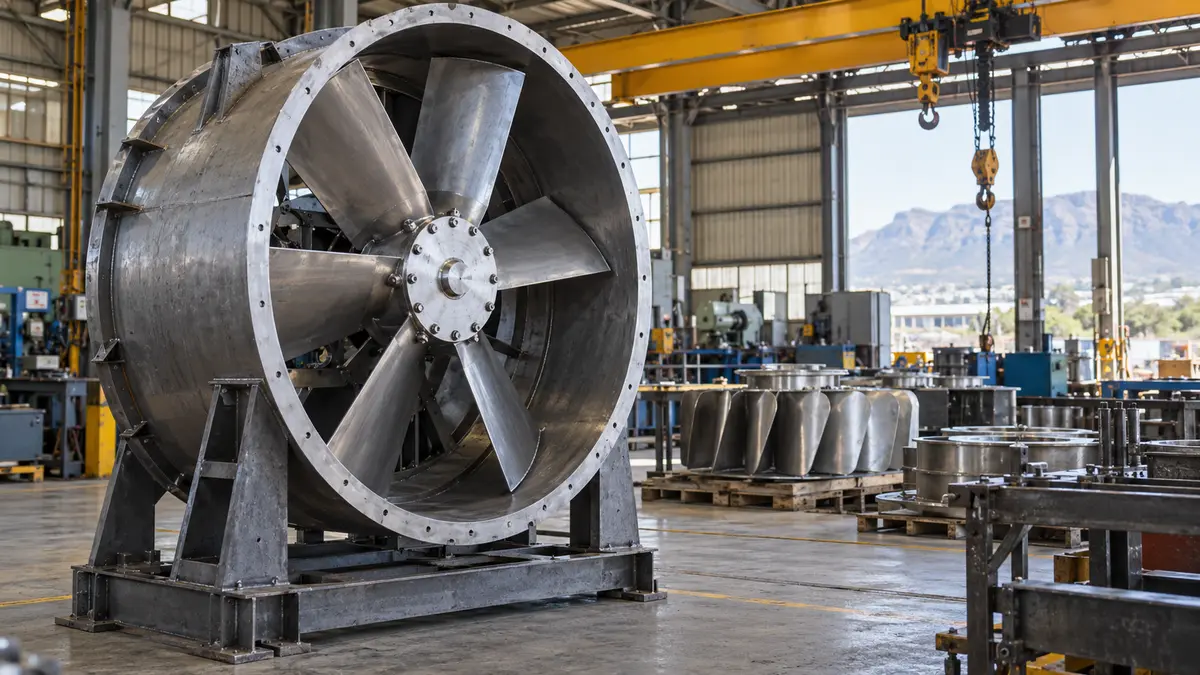
A historical asset register says what existed at a particular time. It does not describe present condition. Equipment may need inspection, calibration or servicing before it can produce consistently. Buildings, utilities and storage areas form part of the same production route. A restart plan that focuses only on the most prominent machine may miss a less visible constraint, such as inspection equipment or a loading area. The relevant question is whether the whole route can perform the intended work.
Inspection should separate observations from estimates. A visible component can be recorded as present without being certified as usable. A test result can support a particular capability without proving every possible product specification. Recording the date and scope of each check helps prevent an old observation from becoming an unlimited assurance. Where access is incomplete, the plan can describe the missing inspection rather than fill the gap with an optimistic assumption. Such discipline makes later decisions easier to revise when actual evidence arrives.
Records connect the machinery to the business
Manufacturing capability often depends on information that is less conspicuous than the equipment itself. Product drawings, process settings, maintenance histories and inspection records help workers reproduce a result. Purchasing records show which material specification was used; customer records explain what was promised. If these records cannot be reconciled, an operating team may need to recreate parts of the production route even when the physical equipment appears intact. Recovering information and recovering a machine are related but distinct tasks.
A records review can begin with a sample product rather than an unlimited document request. The team can trace that product's specification, required inputs, processing steps, inspection and delivery terms. Any missing link becomes an identifiable work item. This approach does not establish what records currently exist at an affected enterprise. It describes how a company could test the completeness of its knowledge before relying on it. The result is a bounded assessment, with a clearer basis than a general statement that the documentation has been handed over.
Customers cannot be assumed to return
A former customer relationship may be useful evidence of past demand, but it is not a current order. Buyers can change their specifications, suppliers or delivery arrangements during an interruption. Some might welcome an additional source; others might have no immediate requirement. A recovery assessment should therefore keep the historic customer base separate from confirmed present demand. Otherwise, a production plan can look commercially supported while depending on enquiries that have never become commitments.
A useful demand review groups information by stage: contacts that can be verified, enquiries with defined requirements, quotations with stated validity and orders accepted through an authorised process. These stages should not be added together as if they were all sales. A small number of well-defined orders may support a narrow restart, while a larger collection of informal expressions of interest may not. No specific demand estimate follows from the political remarks themselves. The commercial evidence would have to come from the company and its customers.
Suppliers determine whether a restart can run
The availability of a plant does not ensure the availability of every input. A production route may depend on a specialist material, replacement part, software service or testing provider. Former arrangements may require renewed agreement, and alternative inputs may need qualification. A company evaluating a possible recovery can build its supply map around the product it actually intends to make, rather than around the suppliers it remembers using. That keeps the assessment tied to current operating requirements.
The map should identify the input specification, the proposed supplier, the evidence of availability and the consequence of delay. Two nominal sources may still rely on the same underlying producer, so counting supplier names alone can overstate resilience. An alternative also becomes useful only when it meets the needed specification. These observations do not establish any current shortage at a named business. They explain why the feasibility of restarting needs evidence that is independent of the feasibility of regaining an asset.
Working capital is a timing problem
A restart can require spending before the first customer payment arrives. Material purchases, inspections, repairs and employee costs may occur at different times from delivery and collection. Even when a product is expected to be profitable, the cash sequence can make the initial production cycle difficult to execute. An operating assessment should therefore describe when resources are needed and when receipts become available, without treating projected revenue as cash already available to fund the work.
A simple sequence can start with preparation, continue through procurement and production, and end with collection. Each stage has an owner and a decision point. Assumptions about payment terms belong beside the corresponding receipt, while uncertain repair costs belong beside the work that would generate them. This is an organisational framework rather than advice to invest, borrow or select a financial instrument. Its purpose is to reveal a funding gap before a delivery promise is made, and to distinguish an estimate from an approved source of resources.
People preserve practical knowledge
Documents cannot always replace the practical knowledge held by workers, supervisors and service specialists. A team may understand how a process behaves in conditions that a formal procedure describes only briefly. A possible recovery assessment therefore needs to identify the skills required for the intended route and the means of verifying that those skills are available. Assuming that a former workforce will return can leave the schedule dependent on people who have made other commitments.
The assessment can distinguish production skills, maintenance skills, inspection capability and the authority to supervise the work. Training needs can then be linked to an actual role rather than expressed as a generic wish to restore the team. A staged restart may make sense if a limited product route can be supported first. That is a possible planning approach, not a claim that any affected company has adopted it. The right scope depends on evidence about the equipment, records, customer requirements and people together.
A controlled restart generates better evidence
Restarting every activity at once can make it hard to identify the source of a failure. A narrower initial route can show whether inputs, equipment, inspection and delivery work together. The point is not simply to produce a demonstration item. The route must generate records showing what was made, against which specification, with which inputs and under whose authority. Evidence from that cycle can then inform the next decision without being stretched into proof of unlimited capability.
A review should also specify what would prevent expansion. A failed inspection, an unresolved records gap or an unconfirmed supply arrangement might require the scope to remain limited. Naming those conditions in advance reduces the temptation to reinterpret incomplete results after resources have been committed. A positive trial would support the process that was tested, at the conditions observed. A broader commercial operation would still need its own evidence. This distinction is particularly valuable when public attention encourages a quick declaration that a business is back.
A sequence of decisions, rather than a single headline
A board can organise preparation around questions that become answerable at different times. Some concern documents already held by the company. Others require access to the enterprise or agreement from counterparties. Further questions depend on a future political or legal outcome that an operating team cannot determine. Separating these groups lets useful preparatory work continue without disguising the external condition as a management decision. It also keeps the company from promising a result it cannot yet control.
- Describe the assets and operating functions involved, with dated evidence.
- Establish which decisions and records could support a defined production route.
- Test demand, supply, skills and resource timing for that route.
- Record the conditions required before any proposed restart or expansion.
The conditional October remarks leave these operating questions open. They may be relevant to how a business prepares, but they do not provide the answers. A defensible recovery plan would move from attributed statements to specific authority, verified condition and executable commitments. Until those elements are known, the most useful outcome is a clear account of uncertainty: what can be checked now, what requires access, and what remains dependent on decisions outside the company's control.