

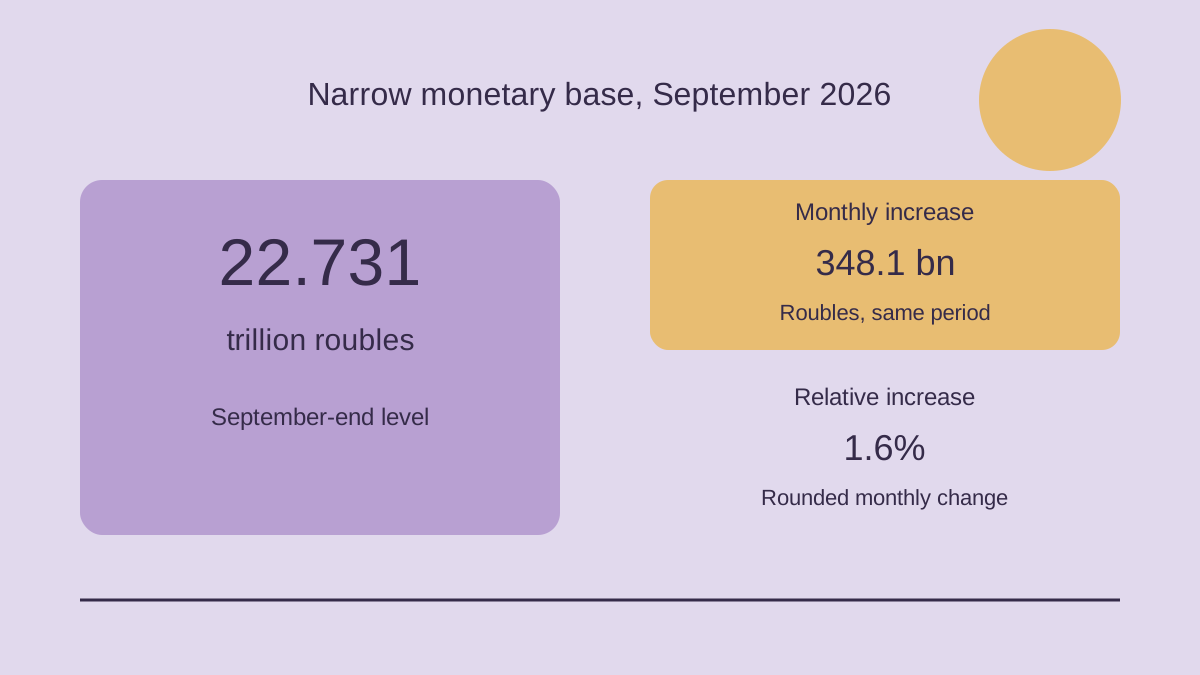
Russia's monetary base in its narrow definition reached 22.731 trillion roubles at the end of September, according to Kommersant's 2 October report citing Bank of Russia data. The reported monthly increase was 1.6%, equivalent to 348.1 billion roubles. The publication notes that the measure has risen since February this year. The figures describe a particular monetary aggregate rather than a change in all the economy's financial resources.
What the measure includes
The narrow definition combines cash issued into circulation by the central bank with banks' compulsory reserves in the national currency held in accounts at the regulator. Two different components therefore contribute to the total. An increase in the aggregate does not identify the share of the change attributable to each component. That conclusion would require a separate breakdown rather than the combined value alone.
The September figure concerns the month-end result. The regulator's monthly data table describes observations at the beginning of the reporting date, making it necessary to match the period with the observation date when using the table. A difference in labelling should not automatically be interpreted as a disagreement between sources. This report retains the period description used in Kommersant's news item.
Reading the amount and the percentage
The increase in billions of roubles and the percentage change express the same monthly result in different units. The amount describes the size of the addition, while the percentage relates it to the previous level. They should not be added together or treated as two independent changes. The final monetary-base total is also different from the monthly increase: it is the level of the measure after the change.
- 22.731 trillion roubles is the reported September-end level.
- 348.1 billion roubles is the reported increase over the month.
- 1.6% is the rounded relative increase for the same period.
A single observation does not provide a complete explanation of the increase. It cannot directly establish a change in household demand, the volume of bank lending or the rate of consumer-price growth. Those questions require other datasets and their own analysis. The monthly monetary measure should therefore remain within its stated definition, rather than becoming a general assessment of the economy.
This report records the published values and the distinction between a level, an absolute change and a relative change. It does not forecast subsequent months. If revisions or a more detailed composition become available later, comparison will still require matching units and observation dates. Keeping these elements visible makes the statistic easier to compare without giving it a broader meaning than the available data support.