
Uzbekistan’s western railway connects the capital with the oasis cities that feature in multi-city Uzbekistan travel itineraries. The route links Tashkent with Urgench and Khiva, alongside the wider railway network serving Samarkand and Bukhara. Electric trains, newly electrified track and passenger carriage production form separate parts of its development. The first Hyundai Rotem high-speed train arrived in Uzbekistan before a presidential journey to Narpay on Mar 18, 2026. Its seven-car formation introduced three accommodation classes and equipment designed for the country’s climate.
A seven-car train for long-distance journeys
The train has seven cars, a length of 175 metres and capacity of approximately 390 passengers. It carries the name Jaloliddin Manguberdi, after the historical commander, and offers VIP, business and economy accommodation. Its white body has tinted windows and blue, green and red stripes reflecting the colours of Uzbekistan’s flag. These features belong to the first delivered formation in a planned fleet of six Hyundai Rotem high-speed trains from South Korea.
The train can reach speeds of up to 260 kilometres per hour. Its maximum speed is a vehicle specification, while the duration of a passenger journey also includes station calls and operating conditions along the railway. The seven-car formation has space for passengers in all three classes, although the available specifications do not include a seat allocation for each class. Class-specific fares and booking conditions depend on the passenger service offered for a particular departure.
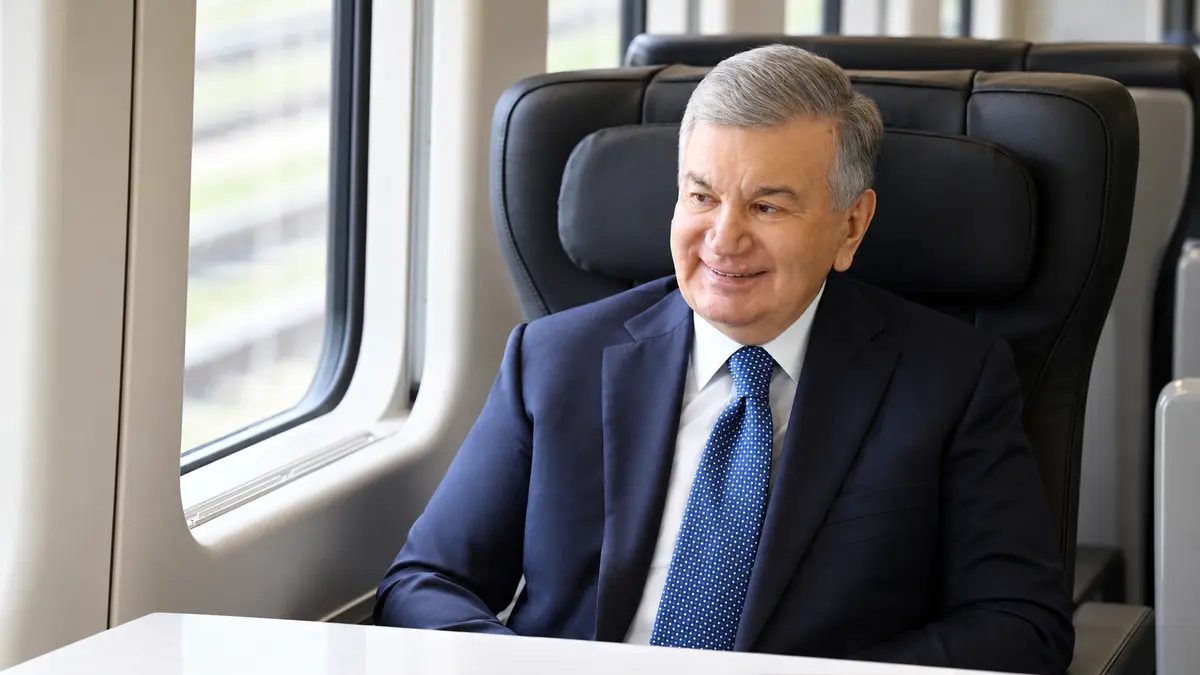
On Mar 18, 2026, President Shavkat Mirziyoyev travelled aboard the newly delivered train to Narpay district in Samarkand region, accompanied by public representatives. During the journey, he spoke with regional officials, labour veterans and young people about projects and changes under way in Uzbekistan. The visit continued with an inspection of a hydroponic strawberry greenhouse in Narpay. The train journey and the agricultural visit took place during the same regional trip.
At that stage, the train was expected to start operating on the Tashkent–Urgench–Khiva route in the near future, with a journey of approximately seven hours. That expectation belongs to Mar 18, 2026; it is a dated service plan rather than a confirmed departure for every subsequent travel date. The train’s arrival, dimensions, accommodation and Narpay journey are documented in the official record of the March visit.
Electrification from Bukhara to Khiva
The 465-kilometre Bukhara–Urgench–Khiva railway was fully electrified by May 1, 2025. Protective fences had been installed along the line and engineering structures had been completed. The works extended electric railway infrastructure across the western corridor, linking Bukhara with Urgench and Khiva. The programme also included plans to acquire six high-speed electric trains from Hyundai Rotem for services between Tashkent and Khiva.
Electric railway equipment supplies power to vehicles through the infrastructure installed along the track. Rails guide the train, while the electrical installation serves its power requirements. Rolling stock and railway infrastructure therefore have different roles within the same journey. A completed electrical installation provides part of the physical railway system; train delivery supplies the vehicles that will carry passengers over it. Their completion dates can fall in different stages of a route programme.
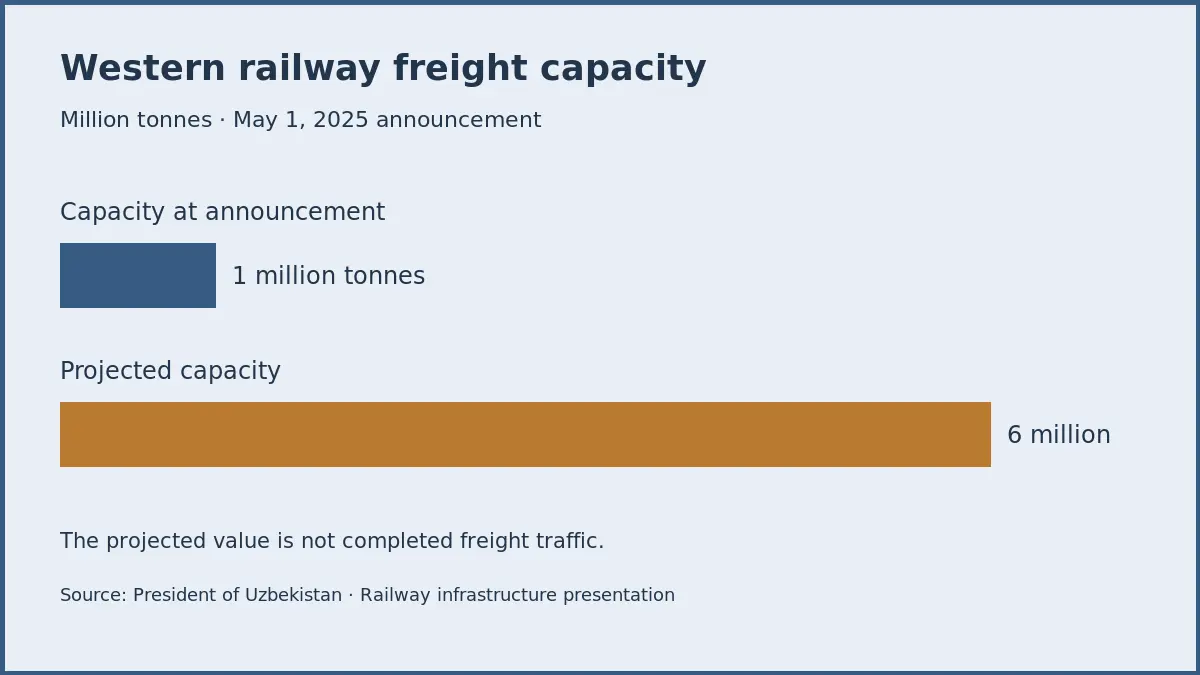
The western railway’s projected annual passenger capacity exceeded three million people following the improvements. Its freight capacity was expected to rise from one million to six million tonnes. Passenger capacity concerns people carried, while freight capacity concerns the weight of goods transported. Both figures were prospective capacities for the upgraded corridor, rather than measured totals of journeys or shipments completed after electrification.
The freight comparison provides two values for the same measure: one million tonnes at the time of the May 2025 announcement and a projected six million tonnes after the improvements. The chart below retains that distinction. The larger bar represents an announced capacity target, not freight already transported. These infrastructure works and capacity plans formed part of the May 1, 2025 railway presentation.
Hyundai Rotem and the six-train order
Hyundai Rotem is the South Korean supplier of Uzbekistan’s new high-speed electric trains. The Uzbekistan HST project has a contract year of 2024 and comprises 42 cars arranged in seven-car formations. Six formations of seven cars account for the full 42-car order. The first delivered formation carried passengers during the March 2026 Narpay journey, while the six-train total refers to the procurement programme.
The manufacturer’s project listing gives 2026 as the service year for Uzbekistan HST. A project-level entry and the arrival of a particular formation cover different parts of the delivery process. The order specifies a fleet; an individual train has its own arrival and use. Those details sit alongside the separate railway works on the Bukhara–Urgench–Khiva corridor and the planned passenger service from the capital to the western cities.
Hyundai Rotem builds high-speed trains for several markets and lists both train types and customer projects in its high-speed train catalogue. Different projects can use different formation lengths and accommodation arrangements. Uzbekistan’s entry specifies seven-car formations. Specifications for another customer’s train, including a different number of cars or seats, do not automatically apply to the Uzbek fleet.
The train’s name appears as Jaloliddin Manguberdy in the May 2025 English-language announcement and Jaloliddin Manguberdi in the March 2026 account. These spellings refer to the same named railway initiative. The procurement connects a South Korean manufacturer with Uzbekistan’s passenger railway programme. Domestic passenger wagon production, which was also being expanded, involved a separate category of rolling stock and a different production programme.

Equipment for Uzbekistan’s operating environment
The delivered train was designed for Uzbekistan’s climatic conditions, with systems resistant to dust, extreme temperatures and sandstorms. Its intended role is long-distance passenger travel. Dust resistance, thermal protection and passenger accommodation belong to different aspects of the vehicle: the operating environment affects its equipment, while the seating arrangement determines the available passenger space. The train combines those requirements within one intercity formation.
Dust can affect moving parts, electrical equipment and ventilation systems. Protection against it concerns the operation of the vehicle, beyond the appearance of its exterior or seats. The available train description identifies dust and temperature resistance in broad terms. Detailed component test results, maintenance intervals and replacement schedules are not included in the published specifications. Such technical details would require separate engineering documentation.
Protective fencing belongs to the railway corridor rather than the onboard equipment. The fences installed during electrification sit alongside track and engineering structures, while the train’s climate-related systems travel with the vehicle. These features occupy different places in the transport system. The western project includes infrastructure along the route and equipment within the rolling stock, with each serving its own physical function.
Inside the train, VIP, business and economy accommodation serves passengers making intercity journeys. The approximately 390-passenger capacity is the total for the formation, rather than a figure for each class. A traveller’s class selection concerns the accommodation available on the booked service. The general specifications establish the existence of the three classes; they do not provide a complete inventory of meals, luggage allowances or class-specific facilities.
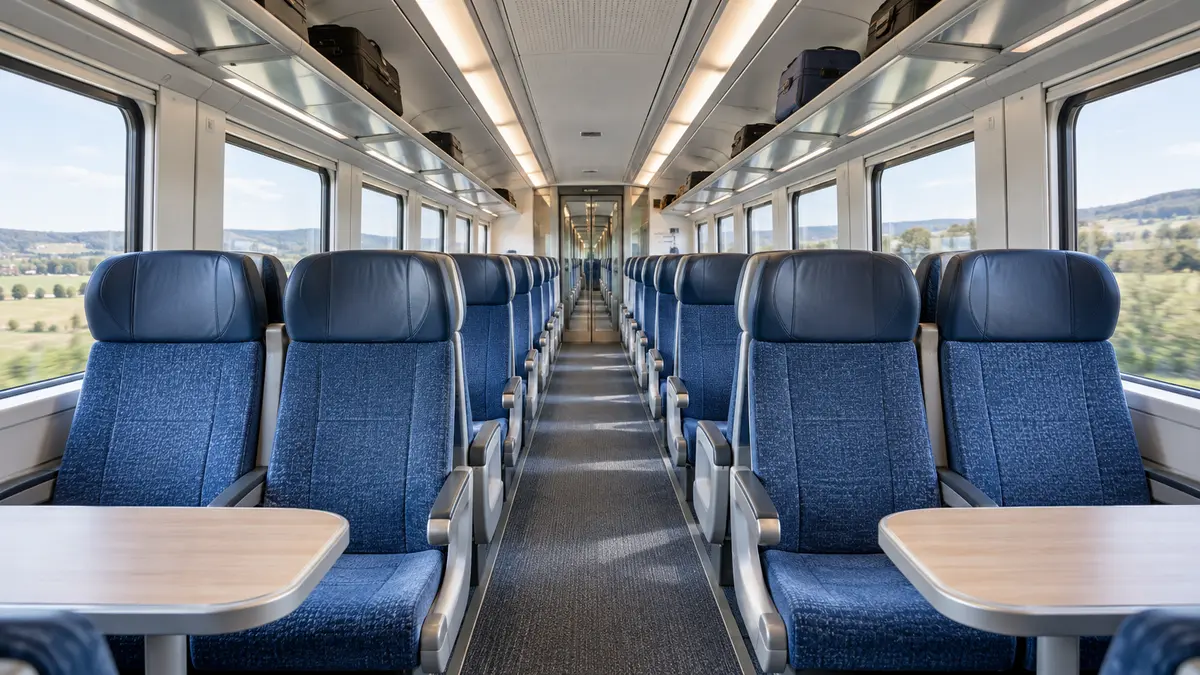
Passenger wagon production within Uzbekistan
Uzbekistan’s passenger wagon fleet was also being renewed through domestic production. A presidential decree dated Oct 10, 2023 addressed fundamental reform of railway transport. The Fund for Reconstruction and Development allocated $50 million to strengthen the railcar-building industry. The first ten new passenger wagons were built in the first quarter of 2025, before the May inspection of railway infrastructure and rolling stock in Khorezm.
The subsequent production plan called for the number of new wagons to reach seventy over the next two years, with older models gradually phased out. The ten completed wagons and the seventy-wagon target have different statuses: one is a completed production figure for a defined quarter, while the other is a future target. The plan also projected additional annual capacity for more than one million passengers through carriage renewal.
During the May 2025 visit, Mirziyoyev inspected the conditions in the new passenger wagons and travelled from Urgench to Khiva with members of the public. The journey took place on the electrified western railway. It preceded the March 2026 Narpay trip aboard the newly delivered Hyundai Rotem train. The two visits involved different rolling-stock developments within Uzbekistan’s passenger transport programme.
Passenger wagons and high-speed electric train formations are separate equipment categories in this programme. The domestic wagon initiative covered manufacturing, funding and replacement of older vehicles. The Hyundai Rotem order covered six electric trains from South Korea. Their capacity figures also refer to different scopes: approximately 390 passengers for a delivered train, more than three million annually for the upgraded corridor, and over one million in projected additional annual capacity from wagon renewal.
Key dates in the railway programme
- Oct 10, 2023: the presidential decree on railway transport reform.
- 2024: the contract year for Hyundai Rotem’s Uzbekistan HST project.
- First quarter of 2025: ten new passenger wagons completed within Uzbekistan.
- May 1, 2025: the western electrified line and new wagons inspected.
- Mar 18, 2026: the first delivered Hyundai Rotem train used for the Narpay journey.
Journey times between the capital and the west
In May 2025, the existing Tashkent–Khiva journey took fourteen hours, with electric trains expected to reduce it to seven hours and forty minutes. By March 2026, the planned Tashkent–Urgench–Khiva journey was described as approximately seven hours. These estimates belong to different stages of the railway programme. The later figure remains approximate; the earlier one was a projected duration announced alongside the completed electrification works.
A passenger journey has a departure station, an arrival station and a service pattern between them. Station calls and time spent at stops form part of the total duration. The train’s maximum speed of 260 kilometres per hour is a separate specification. A timetable sets the actual departure and arrival times for a service, while the route announcements describe the intended western connection and its expected journey length.
Urgench and Khiva are separate urban destinations within the named route. A rail ticket identifies the station at which the passenger leaves the train. Accommodation and sightseeing can require a further local transfer from that station. For a journey ending in Khiva, the historic inner town is a sightseeing destination within the city; it is a different place from the railway terminal where an intercity service arrives.
A multi-city itinerary can combine rail journeys with hotel stays, guided visits and road transfers. ABA Travel’s Uzbekistan programme collection includes routes through Samarkand, Bukhara and Khiva, as well as longer journeys reaching Nukus and the Fergana Valley. Individual programmes have their own sequences of destinations. Train choice, travel dates and included transfers depend on the arrangements for the particular itinerary, rather than on the general specifications of the new fleet.
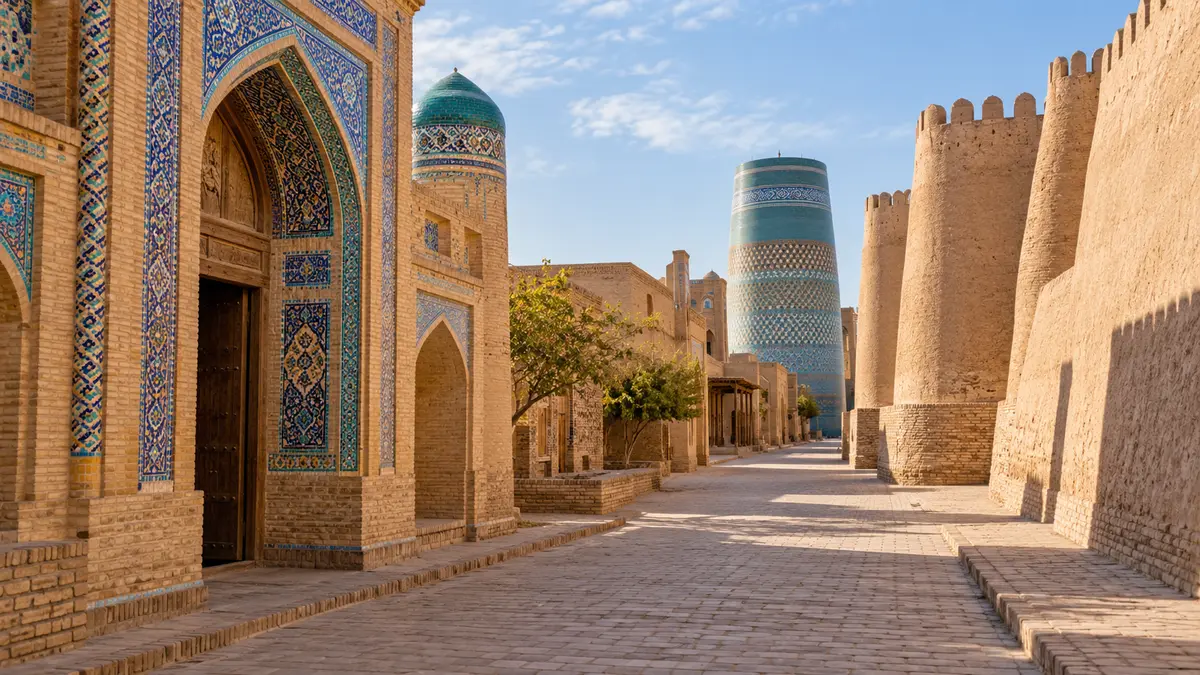
Khiva and the historic cities along the journey
Khiva’s Itchan Kala is the walled inner town of the old oasis city. Its brick fortifications rise to about ten metres, enclosing streets, courtyard houses and religious buildings. The town was a stopping place for caravans before the desert crossing towards Persia. The town’s major palaces include two built in the early nineteenth century by Alla-Kulli-Khan. Its surviving architecture includes mosques, mausoleums, madrasas and palaces, with major nineteenth-century buildings set within an older pattern of streets and domestic spaces.
Bukhara has a different historic urban setting, with a medieval centre containing mosques and madrasas. Samarkand’s heritage spans successive cultural periods and includes monumental ensembles associated with its place on Central Asian trade routes. The three cities are separate destinations within Uzbekistan’s cultural travel geography. Their buildings, street patterns and historical settings provide different subjects for visits along a journey between the capital and the western oasis region.
In Khiva, the journey from a railway station continues into an urban environment built around courtyards, gateways and pedestrian streets. Itchan Kala’s houses include reception spaces and shaded porticoes, while religious and civic monuments occupy sites within the same enclosed town. The heritage setting includes domestic architecture as well as major monuments. A visit can therefore cover the town’s overall street layout alongside individual buildings.
The western railway programme brings together a 465-kilometre electrified corridor, an international six-train order and domestic passenger wagon renewal. The first Hyundai Rotem formation has seven cars, three accommodation classes and equipment intended for long-distance travel in Uzbekistan’s climate. Khiva, Urgench, Bukhara and the wider network remain the geographical setting for those transport developments and for cultural itineraries linking the country’s historic cities.