

CEZ planned to acquire approximately 20% of Rolls-Royce SMR, Reuters reported on October 29, 2024. The electricity producer from the Czech Republic would combine an ownership interest with cooperation on deploying small modular reactors.
The companies' announcement made the investment conditional on regulatory clearances and security assessments. It also said terms for an order of the first unit still needed to be finalised.
A prospective customer takes a second role
The commercial structure is the interesting part of the announcement. Buying equipment gives a customer a particular set of delivery requirements. Investing in the developer adds an interest in the business behind that equipment. The two relationships can support each other, but they are not interchangeable.
The discussion below is editorial analysis of those roles, not a description of undisclosed contractual rights. A customer may focus on the suitability of a plant for its own network. A shareholder also has reason to examine whether the supplier can sustain its broader development programme. A satisfactory answer to one question does not automatically answer the other.
Separate decisions deserve separate evidence
- An equity decision calls for scrutiny of the developer's funding needs and the terms of participation.
- An equipment decision calls for a defined specification, delivery obligations and responsibilities between the parties.
- A deployment decision needs its own site and project assessment rather than relying on the existence of a shareholding.
These are analytical distinctions, not a claim that the announcement disclosed all of those documents. They help readers avoid assigning a partnership headline more meaning than its supporting details can carry.
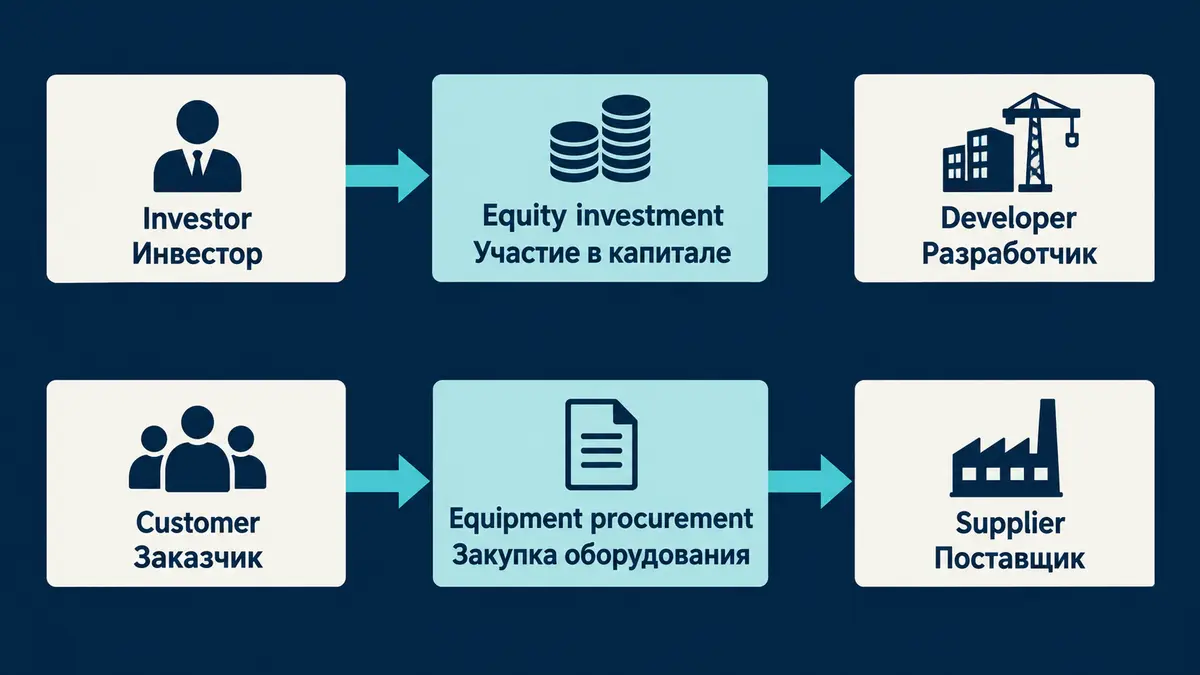
Where interests may meet
In principle, an electricity operator could bring practical questions about maintenance, staffing and integration into discussions with a technology developer. A developer could benefit from a prospective customer's attention to the conditions under which equipment would actually be used. That is a possible rationale for this kind of arrangement, not evidence that any particular technical issue has already been resolved.
There can also be competing priorities. An operator may want a solution tailored to one project, while a developer may seek a design suitable for several customers. A shareholding does not make that tension disappear. The useful question is how decisions and costs are allocated, not whether the parties can describe a shared ambition.
Follow the commitments
For subsequent reporting, the most informative developments would be specific commitments: the investment's completion, agreed procurement terms and clearly identified project decisions. They should be reported separately as they occur. A statement about one should not be used as a substitute for evidence about the others.
This article examines the October 2024 announcement, not later construction or operating results. Its business significance lies in the proposed overlap between customer and investor. Evaluating that overlap requires attention to both relationships while preserving the distinction between them.