

On 22 January 2026, Reuters reported that Global Commodities Holdings (GCH), based in the United Kingdom, launched physical nickel-premium trading. GCH attributed weak interest in its earlier fixed-price offering to hedging difficulties. Its dated release specifies a premium to the LME Monthly Average Settlement Price.
A different question at the negotiating table
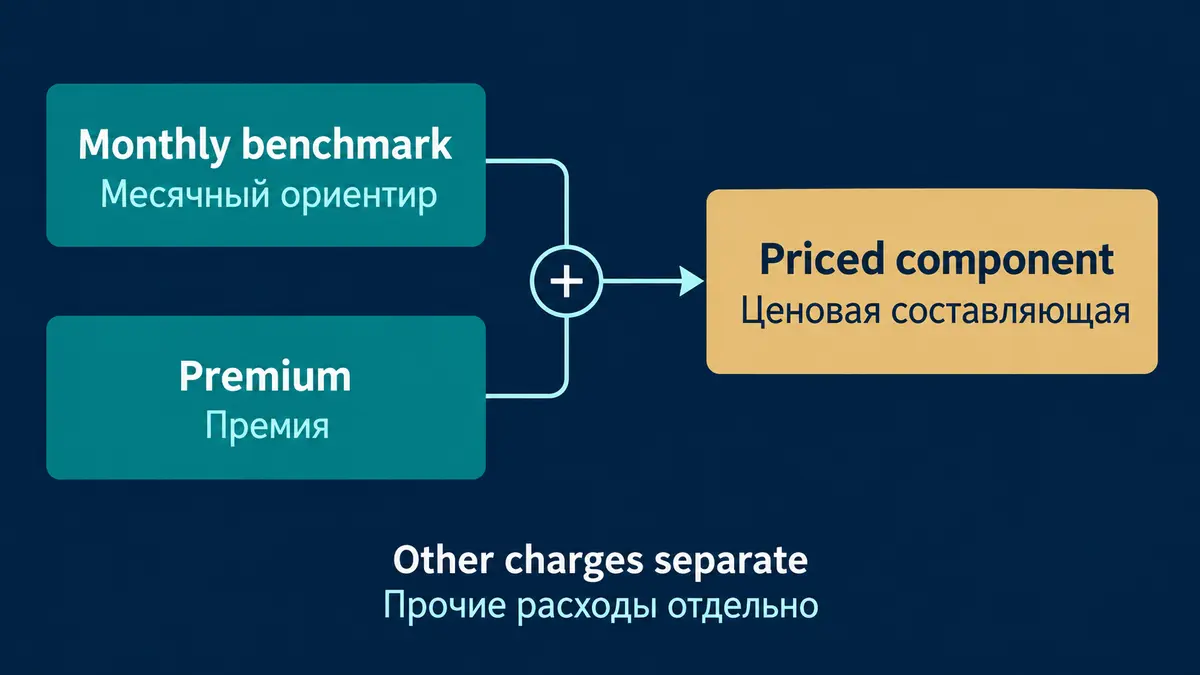
The following editorial explanation examines that pricing structure, not the performance of any customer's hedge. Negotiating an outright price asks the parties to settle the value of the metal as a whole at that point. Negotiating a differential asks a narrower question: what adjustment belongs alongside a defined reference? Agreement on the adjustment need not mean that every component of the eventual payable amount is already known.
That distinction can be useful when the physical specification and the broad market exposure require different decisions. A purchasing team needs material suitable for its operations. Its treasury colleagues need to understand which price movement remains in the contract. Putting both questions into a single headline quotation can make an offer look simpler while making the underlying exposure harder to explain.
The averaging window is part of the price
Consider a hypothetical comparison of two offers with an identical premium but different benchmark months. They are not economically identical merely because the displayed additions match. Each refers to a different observation period. No assumed market direction is necessary to see the distinction: the contractual inputs are different before either month's final average is known.
- Identify the reference and the period over which it is averaged.
- Check what the differential covers under the particular contract.
- Keep quantity, quality and delivery obligations alongside the price terms.
- List separately any charges outside the quoted pricing component.
A formula is not the whole invoice
A benchmark-plus-premium calculation describes the price component defined by those terms. It is not a universal landed-cost or invoice formula. Other amounts may apply under an individual agreement; whether they do must be checked in that agreement rather than inferred from the presence of a premium. The same discipline applies when comparing quotations with different units or delivery obligations.
Nor does a familiar reference guarantee a perfect hedge. Timing differences and contract-specific exposure still require examination. This is an explanation of a commercial format, not a recommendation to enter a derivative or a claim that risk disappears. The practical insight is narrower: a negotiated physical adjustment and a variable benchmark can be recorded separately, making the remaining pricing question easier to identify.