
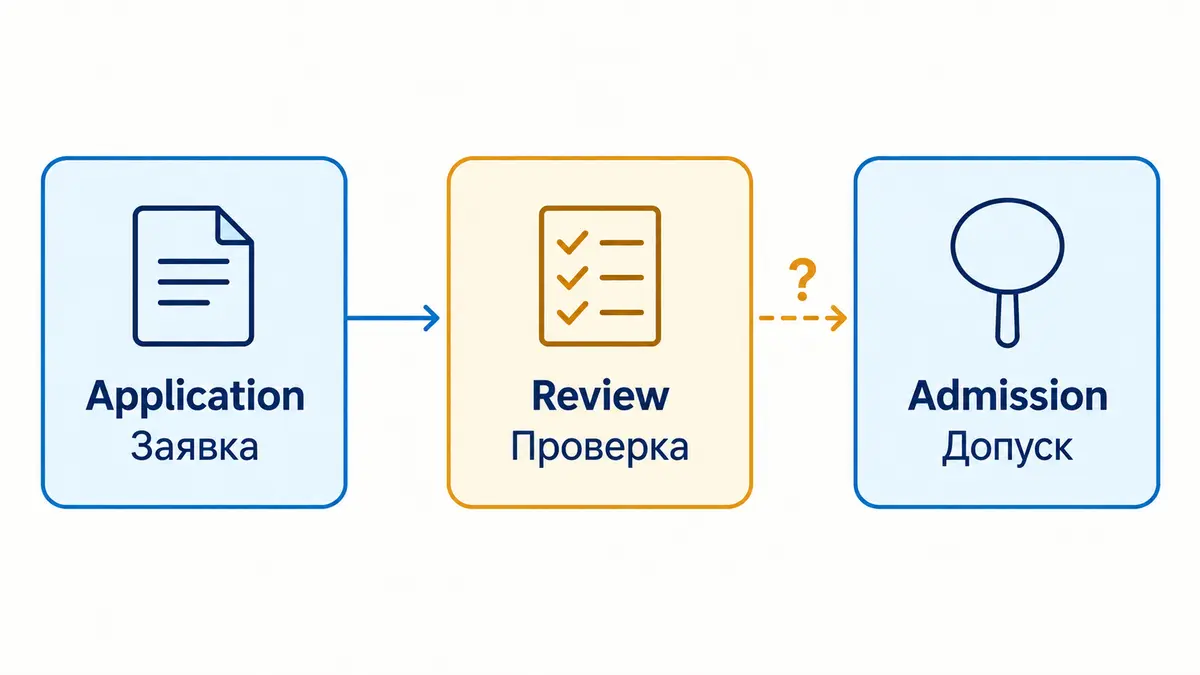
On 10 June 2026, Reuters reported that a sale attempt involving Uzhuralzoloto in Russia had no admitted bidders: the sole application lacked a deposit. Rosimushchestvo confirmed that the auction failed. The agency used broader wording about absent applications; the distinction between a submission and admission comes from Reuters.

A price contest starts after entry
This is a historical account of that round, not guidance on present auction rules. The editorial question is what an unsuccessful process can tell an observer. If no applicant reaches the stage of participating, the result is different from a contest in which several admitted bidders make competing offers.
Consider a hypothetical sale with three separate records: expressions of interest, submitted applications and admitted participants. The figures need not match. A person may ask for information without applying. An application may arrive without satisfying the entry conditions. Counting every contact as a bidder would make the apparent competitive field larger than the process actually contains.
Keep the count attached to its stage
The useful analytical move is to name the stage before interpreting the number. A submission describes something received. Admission describes a decision about participation. A price offer describes another action again. Moving between those categories without saying so can turn a procedural fact into an unsupported claim about demand.
- Does the reported count refer to applications or admitted participants?
- Did the process reach a stage where competing prices could be observed?
- Is a reason for non-admission stated, or merely being inferred?
- Does the information describe this round or a later sale attempt?
These questions are a reading framework, not a statement of the legal requirements for any auction. The specific paperwork, deposit terms and participation thresholds must come from the documents for the relevant round. This article does not import conditions announced for another sale.
Failure before bidding is not a valuation
A hypothetical process that stops at the entry stage cannot, by itself, reveal the range of prices eligible participants would have offered. Nor does an incomplete application establish why the applicant did not complete it. Lack of interest, lack of funds and an administrative obstacle are different explanations; none should be selected merely because a sale did not proceed.
The same caution works in reverse. Receiving an application does not prove that the applicant could complete a purchase. An observer can acknowledge interest at one stage while withholding a conclusion about readiness at the next. That is not a contradiction: the two statements concern different actions.
The commercial lesson is to separate an entry problem from a price result. A clear account identifies where the process stopped and which evidence supports that description. It need not turn a failed round into a judgement about the asset's value, the applicant's motives or the eventual outcome of a later transaction.