
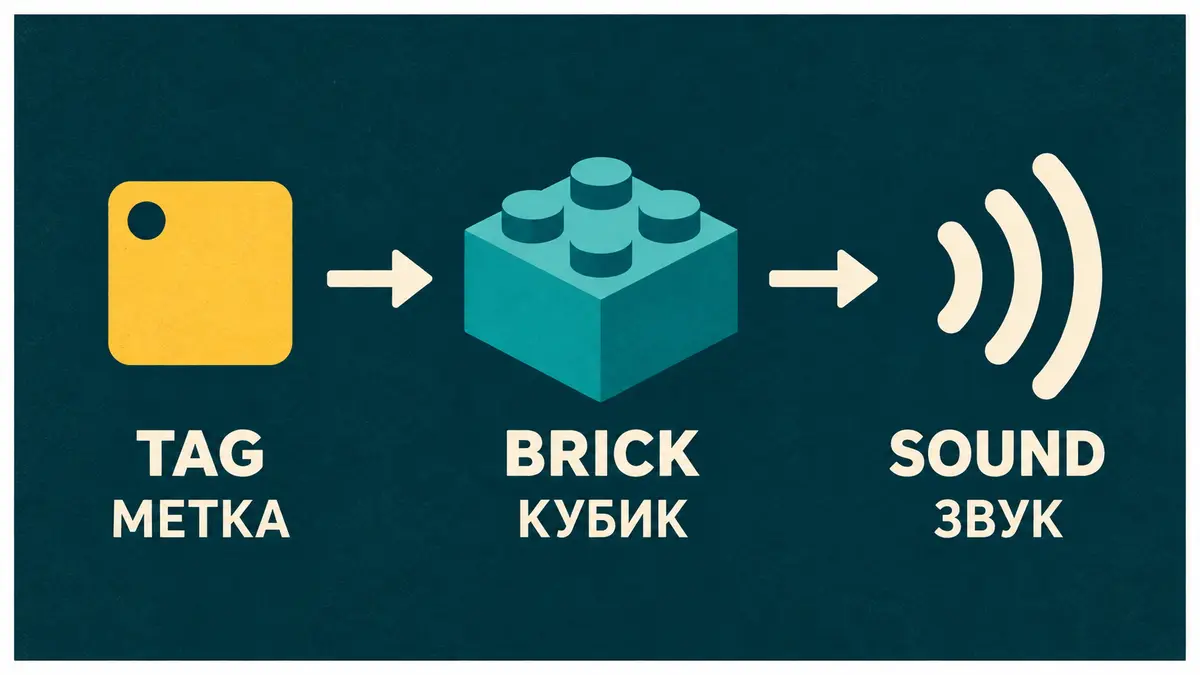
LEGO introduced Smart Play on January 5, 2026, at CES in Las Vegas, in the United States. Its launch announcement described a system combining an electronic Smart Brick, Smart Tags and Smart Minifigures for responsive physical play without screens.
A tag supplies context for the response
In Reuters coverage of the January demonstrations, a company representative showed how a nearby tag instructed the brick to behave as a transport. The footage description also records sound changing with the orientation of a model. These were demonstrations of the interaction, not measurements of subsequent sales or learning outcomes.
The editorial distinction is between adding feedback to an object and moving an activity onto a display. In the first case, the object remains the place where the user acts and receives a response. That changes the design question: the important issue is whether the response makes sense in the physical activity, rather than how much information can fit on a screen.
Three questions for an interactive toy
- What action gives the system something to detect?
- What context determines which response is appropriate?
- Can the player understand the connection between the action and the response?
Those questions describe an evaluation framework, not a claim that every possible combination has been tested. A sound effect can be technically impressive yet ambiguous in play if its trigger is hard to recognise. Conversely, a simple response can be useful when the relationship is clear. The value of feedback therefore cannot be judged by counting electronic components alone.
Compatibility needs a precise explanation
The company's announcement says the platform elements are compatible with the existing LEGO building system. That statement should not be expanded into a claim that every ordinary piece gains electronic functions. Fitting into a construction and supplying the sensing or response capability are different roles.
For product communication, this creates a practical challenge. An explanation needs to distinguish the parts that provide the interactive function from the pieces used to build the surrounding model. A customer looking at a finished creation should be able to understand that difference without assuming that every component does the same job. This is an editorial observation about explaining a system, not a report of customer confusion.
A demonstration is the beginning of the evidence
The January presentation established what the company was showing at that event. It did not, by itself, establish how long families would use the feature, which combinations they would prefer or how reliably every household would reproduce a demonstration. Those outcomes require different evidence from a launch presentation.
The technology news is the introduction of an interaction layer within physical construction. Its commercial significance will depend on use beyond the first demonstration, but this historical account does not claim to measure that later result.