

A Leonardo booking-system outage led to some flight cancellations in Russia on January 26, 2026, Reuters reported, citing the transport ministry. The system had been restored by the time of the report. The ministry did not identify the affected carriers or destinations.
A service alert is not an individual flight decision
The narrowness of that information matters. A statement about a shared booking service describes a problem in one part of air travel. A passenger still needs a separate answer about a particular departure. Knowing that a technical service is available again is not the same as knowing the outcome of every journey affected earlier.
The following discussion is editorial analysis of passenger communication, not a reconstruction of the airlines' handling of the incident. It does not assign cancellations to a named carrier or suggest that disruption continued after the reported restoration.
Keep the messages distinct
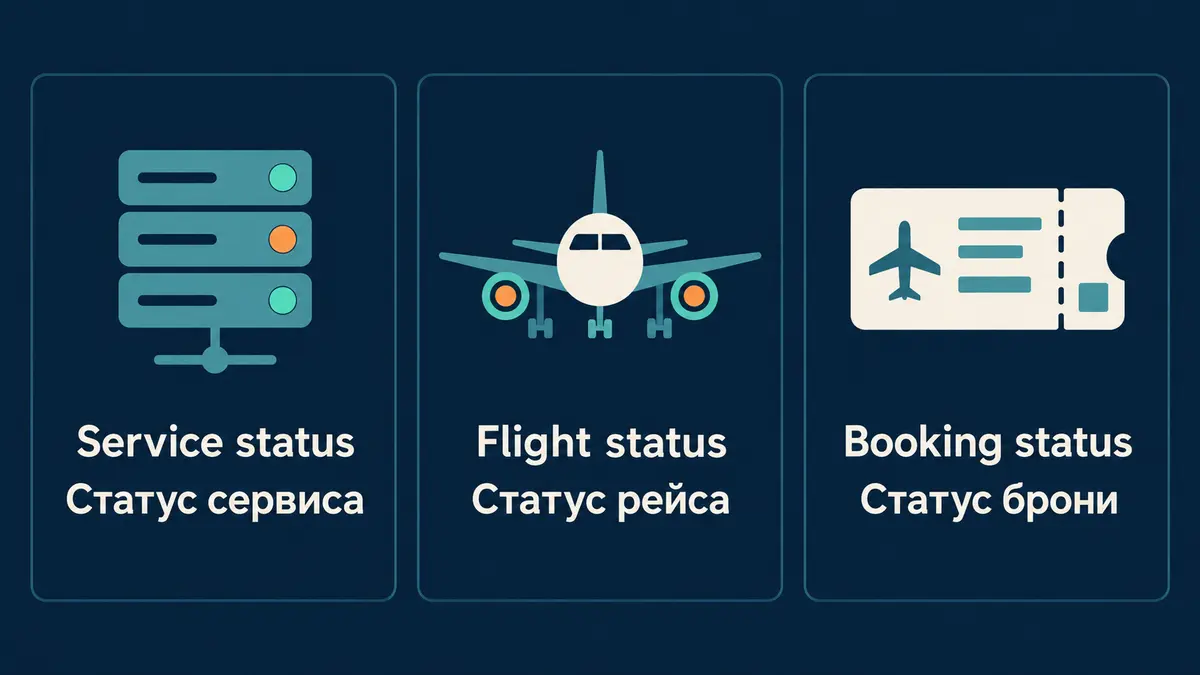
- A service-status message explains whether the reservation function is available.
- A flight-status message concerns a particular departure and its scheduled operation.
- An individual booking message concerns the passenger's reservation and any action requested by the carrier.
Combining these messages into a single broad notice can leave important questions unanswered. Conversely, separating them allows a reader to see exactly which statement applies to the journey in question. This is a communication principle, not evidence that an airline used or failed to use a particular notification process.
Specificity without an invented passenger count
A report can be useful without attaching a dramatic total to an incident. If the available information does not identify the flights, adding an estimated passenger figure would create an appearance of precision without a reliable base. The same problem arises when a general warning is treated as proof that a specific service was cancelled.
For later reporting, carrier-level notices and dated flight information would be more informative than repeatedly circulating the original system alert. They could establish the scope of a particular operational decision. They would not, by themselves, establish compensation, liability or the technical cause of the underlying problem.
The time attached to a notice matters
An incident report has a publication time as well as a subject. An early warning and a later restoration notice can both be accurate while describing different moments. Presenting the former without the latter can mislead readers about the state of the service.
This article records the January event as reported then. It is not a live flight-status page or a statement about present availability. Its business lesson is specific: the operator of a shared digital service and the carrier communicating an individual journey answer different questions. Clear wording keeps those answers from being mistaken for one another.
Source: Reuters report, January 26, 2026.