

PhosAgro reported higher revenue but lower adjusted EBITDA for the first half of 2024. The fertiliser producer from Russia published its results on 7 August. Revenue reached 241.6 billion roubles, up 13.5% from the same period of 2023, while adjusted EBITDA fell 7.2% to 76.9 billion roubles.
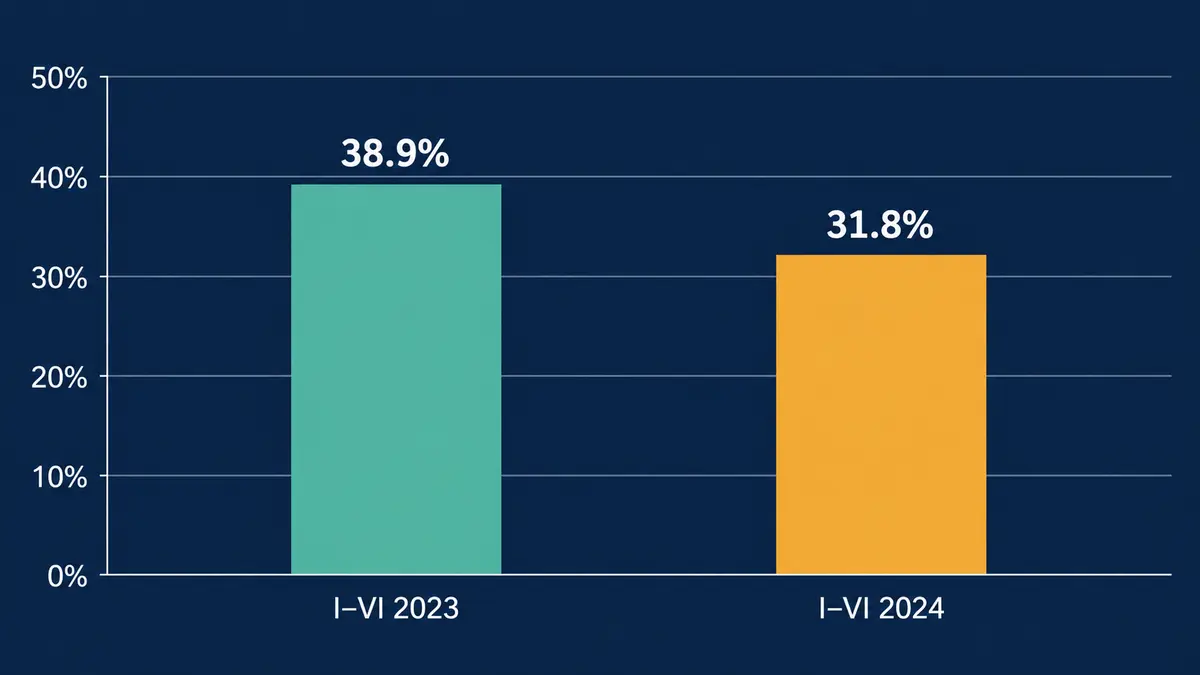
Growth did not carry through to the margin
The company's release put the adjusted EBITDA margin at 31.8%, compared with 38.9% a year earlier. PhosAgro linked the lower adjusted earnings to weaker fertiliser selling prices and higher costs associated with export duties. These figures describe the six months ending 30 June 2024, not a current trading update.
Our reading of the comparison is straightforward: a larger revenue total is not enough to describe the direction of operating profitability. The earnings measure and the sales denominator have moved differently. A useful results summary needs both, with the same period and definition attached to each.
Keep the comparisons aligned
- Use first-half figures on both sides of the year-on-year comparison.
- Retain the word “adjusted” when discussing this EBITDA measure; do not silently substitute another earnings line.
- Distinguish percentage changes in money amounts from percentage-point changes in a margin.
Quarterly recovery is a separate comparison
Interfax's report led with its calculation that second-quarter adjusted EBITDA rose 15% year on year. That does not contradict a decline across the half year. A quarter is only part of a six-month period, so its direction cannot replace the result for the combined period.
The margin figures imply a decline of 7.1 percentage points, calculated by subtraction. Calling that a 7.1% decline would change the meaning: a relative percentage change uses the earlier margin as its denominator. This distinction is particularly important when a chart compresses several results into a small space. Labels need to state what is being compared, rather than leaving the reader to infer the unit.
The announcement is therefore a case of different measures telling different parts of the same story, not competing verdicts about the company. It supplies a historical comparison of sales and adjusted earnings. It does not, by itself, establish a future share-price direction or the suitability of an investment.