

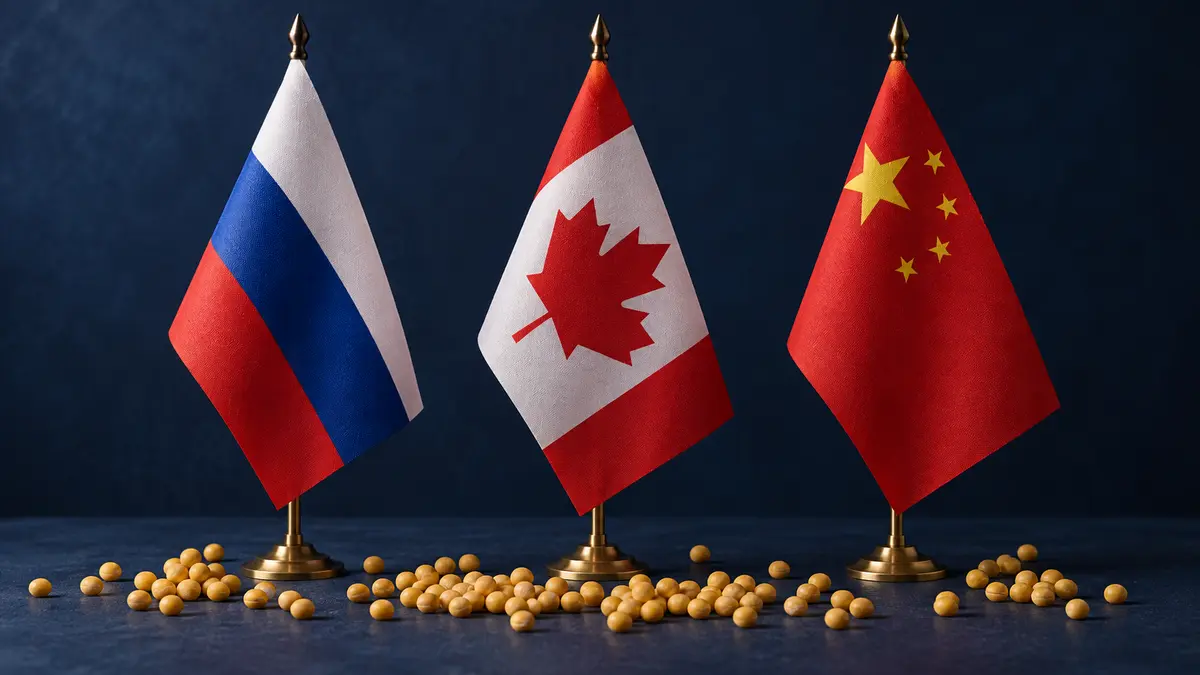
Russia supplied 49.1% of the peas imported by China in the 2023/24 agricultural season, ahead of Canada at 44.6%. Reuters reported the figures on 9 July 2024, citing Russia's Union of Grain Exporters. The report put Russian shipments at 1.13 million tonnes. These are historical, season-specific figures, not a description of today's supplier rankings.
A change in the purchasing mix
The finding concerns the origin of imported peas. It does not rank countries by their total agricultural exports, nor measure all peas consumed in the importing country. Keeping that boundary clear matters when a striking trade headline becomes an input to a purchasing decision. An importer buying a particular crop needs evidence about that crop, rather than a broad claim about national trading strength.
The report carried by The Pig Site provides a snapshot of competing supply origins. Our reading is that a supplier ranking is a starting point for commercial questions, not an answer to them. It cannot establish which individual exporter offers the best delivered price or whether a particular shipment meets a buyer's specification.
Three checks before comparing offers
- Match the product specification: a broad crop name is not a substitute for agreed quality and inspection terms.
- Use the same delivery basis: compare transport, handling and payment obligations rather than headline unit prices alone.
- Align the period: an agricultural season and a calendar year are different reporting windows.
Share and sales answer different questions
A falling percentage does not, by itself, prove that a supplier shipped fewer tonnes. The denominator may have grown. Equally, gaining share says nothing definite about the margin earned on those tonnes. Freight, the purchase cost of the crop and the contract price would be needed to make that assessment. These are limits of interpreting a share figure, not findings about the profitability of the exporters in this report.
For a buyer considering another origin, a useful next step would be to compare an actual sample and a fully specified offer with the existing contract. For an exporter, the corresponding question would be whether the order remains attractive after delivery costs and payment timing are included. Neither decision can be made from a national ranking alone.
The historical result is therefore best retained with its original period and attribution. A new purchasing cycle calls for new quotations and current eligibility checks, not an assumption that the order of suppliers from one completed season will persist.