
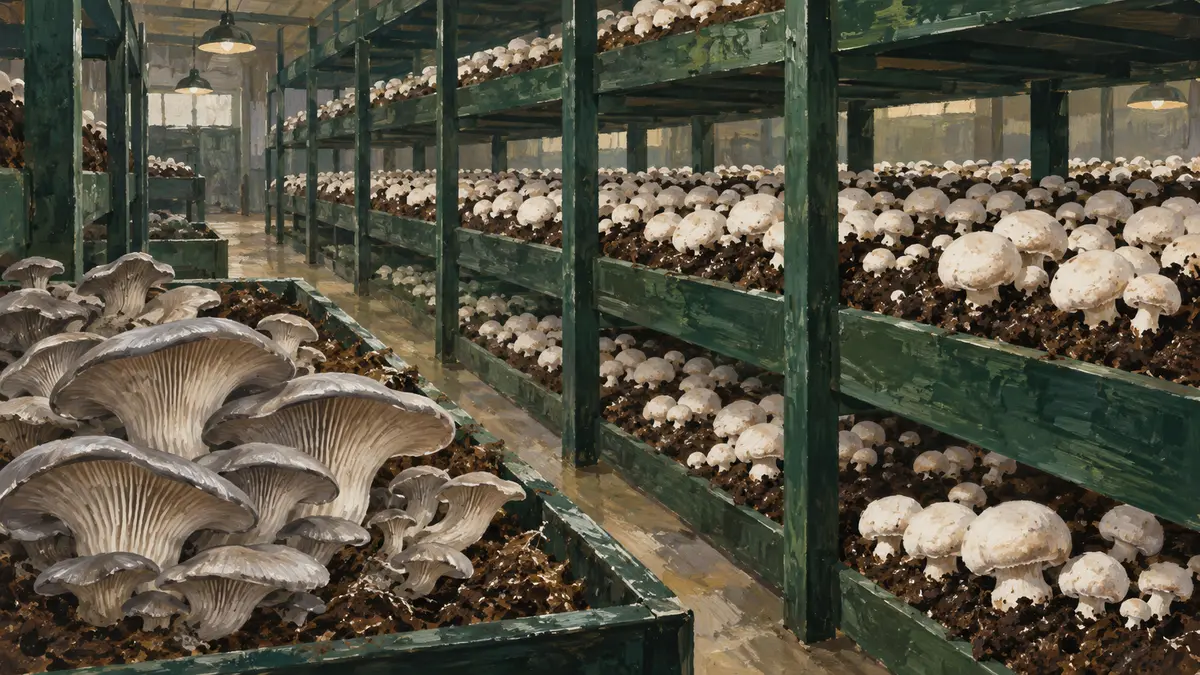
A report issued in March 2024 put cultivated mushroom output in Russia at 145,900 tonnes for 2023, up 13.3% from 2022. Interfax, citing the Agriculture Ministry on 6 March 2024, described the total as a record. Button and oyster mushrooms were the principal varieties mentioned. The figure concerns production, not retail spending or the profit earned by farms.

A larger harvest is one part of the market picture
The announcement belongs to the 2024 news record, although the activity it measures took place in the preceding year. Keeping those dates separate avoids a misleading comparison with a later report that measures a different period. This is a retrospective account of that announcement, not a claim about current production.
The economic interpretation also requires care. A weight-based output total measures physical activity. It cannot by itself establish whether producers received higher prices, whether their costs changed or whether retailers sold every additional unit. Those are separate questions requiring separate evidence. A larger supply figure can therefore be important without being sufficient to describe the financial position of an individual business.
What buyers would still need to know
For a purchasing team, a national annual total is a starting point rather than a delivery schedule. Before changing orders, the team would need information about available varieties, agreed product specifications, delivery locations and the timing of supply. None of those details can be calculated simply by dividing an annual national figure among stores or calendar months.
- Compare production figures covering the same period and product scope.
- Keep physical output separate from sales value and profit.
- Check supplier-level availability before treating national growth as additional local supply.
The missing commercial measures
An illustrative example explains the distinction without estimating the reported farms. If a fictional producer sells more kilograms while its average price falls, its revenue may rise, remain unchanged or decline, depending on the size of both movements. Even rising revenue would not establish rising profit without a cost comparison. The output announcement does not supply the inputs for that calculation.
The defensible conclusion is consequently narrow: the ministry reported a higher physical production total. Claims about cheaper shopping baskets, improved farm margins or the performance of a named supplier would need further data. For readers following food markets, preserving that boundary makes the announcement useful without turning one indicator into an unsupported account of the entire supply chain.