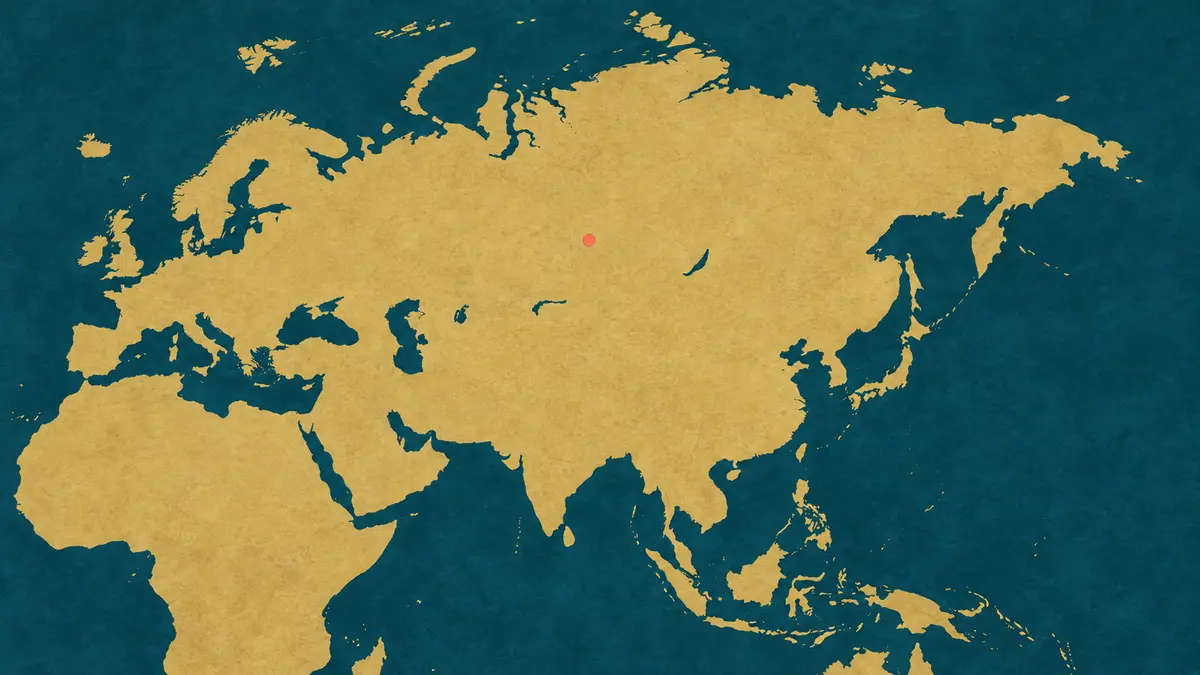
Construction of the Siberian Ring Photon Source, SKIF, in Koltsovo, Russia, was complete, science minister Valery Falkov said on 9 July 2026. Interfax reported his statement that the technical supervisory authority had issued its conformity conclusion that day.
He announced the construction milestone while addressing a national congress of young scientists' councils and student scientific societies.
Experimental stations take shape
The science ministry's 21 May account described equipment installed and dry-tested at two stations. One concerns fast processes under heavy loads and high temperatures; the other provides high-energy X-ray diagnostics.
Research equipment
- An educational station was preparing titanium-catalyst studies for ultra-high-molecular-weight polyethylene.
- Microfocus was designed to use diamond anvils to study matter under extreme pressure.
Polyethylene applications included artificial-joint liners.

Accelerator development
A separate ministry report dated 22 December 2025 recorded an earlier completed engineering step: a 3 GeV electron beam had passed from the booster through a 220-metre transport channel into the storage ring. Institute directors Pavel Logachev and Valery Bukhtiyarov briefed officials on progress during the visit described in that December report.
December's ministerial account recorded the storage ring's diameter at 240 metres, within the scientific facility then under construction. Authorities reported more than 250 specialists working there, including 90 scientists.
Scientific preparations
The ministry's 9 June update listed electromagnet power supplies, specialised vacuum equipment and a power cable manufactured in Podolsk among the installation's supporting components. The scientific programme was developed with the Russian Academy of Sciences.
A commission including representatives of the academy, the Joint Institute for Nuclear Research and the Kurchatov Institute had checked equipment operation and conformity with specified parameters. The June update scheduled initial experiments for autumn 2026.